Energy-Saving Benefits of Modern Commercial HVAC Systems
Key Takeaways
- There are long-term cost savings to be gained by upgrading to energy-efficient HVAC systems in the form of lower bills, reduced maintenance costs, and incentives like rebates and tax credits.
- This supports better occupant satisfaction and enhanced employee well-being in such commercial spaces.
- Integration with building management systems and IoT connectivity enables real-time monitoring, predictive maintenance, and automated adjustments, which further optimize energy usage.
- Proper sizing, adaptation to climate, and attention to the building envelope are key to squeezing out efficiency and making sure systems are suited to a particular building and region.
- Verifying HVAC efficiency with trusted energy ratings and third-party certifications validates performance assertions and promotes sustainability initiatives.
To be specific, by applying smart controls, efficient fans, and better insulation, modern commercial HVAC systems offer clear energy-saving benefits. These systems reduce electricity consumption, resulting in reduced expenses for a number of businesses. Newer units run at varying speeds and adapt to actual demand, so they do not expend energy unnecessarily when structures are unoccupied or the weather is temperate. High-efficiency filters and heat recovery options keep indoor air quality high without additional energy use. In many locations, regulations mandate reduced emissions, and these HVAC systems contribute to meeting these goals. When companies convert to modern setups, upkeep becomes simpler and systems endure longer. The body of the article discusses the features and actual savings with these new systems.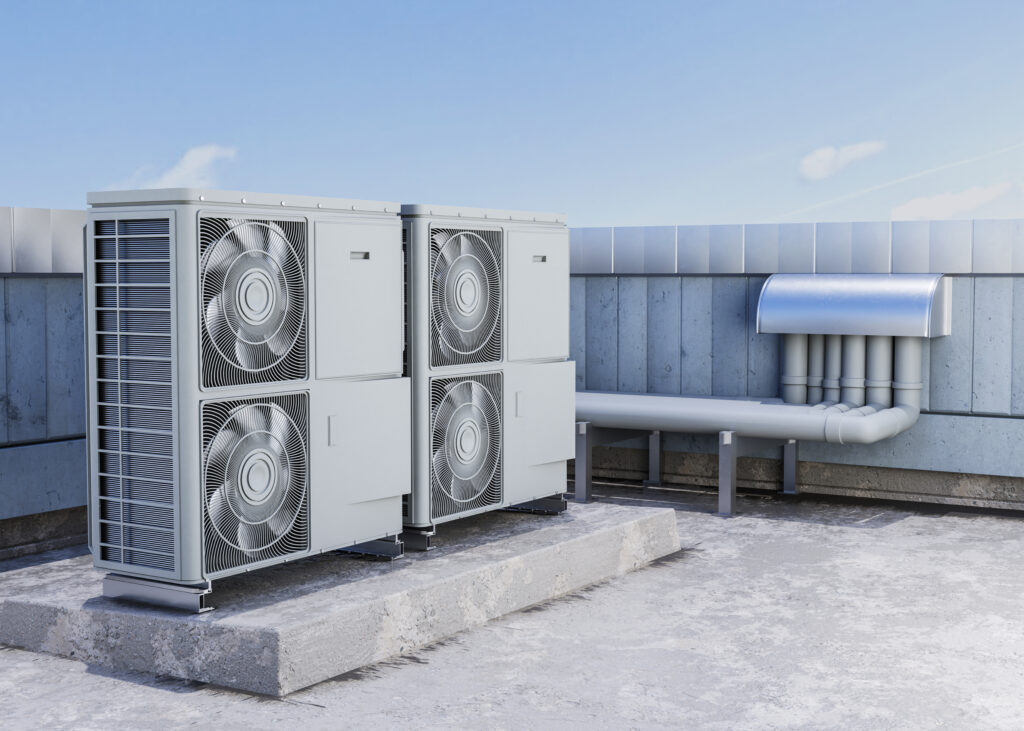
How Modern HVAC Systems Save Energy
Modern commercial HVAC systems incorporate a combination of smart design, new technology, and efficient HVAC solutions to enhance energy efficiency and increase indoor comfort. These systems enable buildings to achieve energy efficiency goals, reduce utility costs, and contribute to global environmental sustainability.
- Modern HVAC systems save energy by using variable-speed drives and compressors that can match output to building needs and reduce wasted energy.
- Smart controls make real-time changes, track energy use, and identify inefficiencies quickly.
- Modern designs optimize airflow, insulation, and system integration for enhanced efficiency.
- Heat recovery captures and reuses waste heat to reduce overall energy consumption.
- Zoned systems provide exact control by heating or cooling only where and when necessary.
1. Variable-Speed Technology
Variable-speed compressors and fan motors adjust their speed to real-time demand. HVAC systems do not run at full speed when it is not necessary, which saves a ton of energy. They run longer at low speeds, which keeps temperatures stable and helps distribute air more evenly in the building. Fewer start-and-stops mean less wear, fewer maintenance calls, and a longer system life.
Noise plummets, too. Because motors rarely have to run at full power, the system maintains a quieter indoors. Variable-speed systems perform better at part-load, with potential savings of 30% or more and payback in three to five years.
2. Smart Controls
Smart thermostats and energy management systems learn when a space is busy and adjust temperatures. This restricts heating and cooling to when people occupy the rooms. Others drop noncritical loads during energy peak periods, helping reduce bills.
Building managers can verify and adjust settings from remote locations using remote access. Real-time data and analytics help identify spikes or wasted energy immediately, so solutions are rapid. Over time, that data helps optimize the system for further savings.
3. Advanced System Design
Whole-building design means HVAC systems play nicely with lighting, insulation, and windows. Smart duct design and excellent insulation will prevent leaks and maintain good airflow.
Selecting top-performing equipment and non-ODP refrigerants reduces energy consumption and environmental effects. Adding renewables such as solar pushes efficiency even higher. Buildings operating with long-term comfort strategies can burn as little as 20,000 Btu per square meter per year, which is far less than before.
4. Heat Recovery
Heat recovery systems pluck waste heat from exhaust and recycle it to preheat water or air. This can drive efficiency as high as 85 percent. Desiccant wheels and heat exchangers extract beneficial heat from outbound air, so less energy is required for fresh air.
Others capture both sensible and latent heat, making them even more effective. Utilizing this recovered heat for space heating or hot water reduces the demand on conventional sources, decreasing both emissions and operating costs.
5. Zoned Systems
Zoned HVAC enables users to control heating and cooling in individual spaces. No space will get conditioned air unless it is actually being used, so less energy is wasted on empty rooms. This enhances comfort because residents can customize temperatures to their preference.
Energy bills drop because systems aren’t running for the entire building all at once. Smart HVAC: How today’s heating and cooling systems save energy with targeted control.

The Financial Case for Upgrading
Investing in a state-of-the-art commercial HVAC system is not just a technical choice; it’s a strategic business decision. As commercial building owners weigh upfront costs against long-term savings, they often find that efficient HVAC systems provide a pragmatic solution to lower energy expenses and maintenance while boosting property value. Many countries, including the U.S., support these upgrades with incentives and rebates, making efficient HVAC solutions even more appealing to property owners worldwide.
Calculating ROI
The ROI for new HVAC systems is significantly driven by HVAC energy efficiency and lower operating costs. High-efficiency units, particularly those with robust SEER or AFUE ratings, can reduce your monthly energy bills by anywhere from 20% to 50%, depending on prices in your area and the size of your efficient HVAC system. For a company upgrading from an outdated unit to a variable-speed, ENERGY STAR model, these energy savings compound year after year.
Due to these higher energy standards, properties often qualify for certifications such as LEED or ENERGY STAR. These badges not only demonstrate your commitment to energy efficiency but also increase property value, attracting more tenants and investors seeking efficient HVAC solutions. In the U.S., tax credits and the Section 179 deduction enable businesses to recoup some of the upfront costs associated with these efficient upgrades.
Payback Periods
The payback period tells you how long it takes for the energy savings to pay for the upgrade. Most newer commercial HVAC equipment pays back in three to seven years. This can be quicker when major rebates are involved or if you live in an area where energy prices are unusually high.
By comparing payback periods for various systems, we can identify the greatest value. Short paybacks deliver quick returns, but it is wise to examine immediate and enduring savings. Checking in on your energy bills each year monitors progress, identifies problems early, and ensures that your new system is performing as expected.
Available Incentives
- Utility company rebates for installing high-efficiency HVAC equipment
- National and local tax credits for energy-saving improvements
- Direct financial assistance from city or regional energy programs
- Manufacturer discounts and seasonal promotions on new models
- Incentives exist for buildings that are ENERGY STAR or LEED.
Incentives can shave thousands from the front-end cost of efficient HVAC upgrades. Utility companies often reward these upgrades that achieve specific HVAC energy efficiency benchmarks. Tax credits, such as those under Section 179 in the US, can further help defray expenses. By signing up for local energy programs or green certifications, you can gain access to substantial energy savings and property value appreciation.
| System Type |
Upfront Cost (USD) |
Avg. Annual Savings (USD) | Payback Period (Years) |
ROI (5 Years) |
| Basic High-Efficiency |
$8,000 |
$1,600 | 5 |
100% |
| Variable-Speed, Zoned |
$12,000 |
$2,400 | 5 |
100% |
| ENERGY STAR w/ Rebates |
$10,000 |
$2,500 | 3.2 |
125% |
Beyond Cost Savings
Upfront Savings Not Required Anymore. It takes more than lower energy bills for modern commercial HVAC to save money. Their advantages spread far beyond cost savings, impacting almost every element of building management and the occupant experience, adding value well above simple cost reduction.
- Consistent temperature and humidity control
- Improved indoor air quality and ventilation
- Enhanced comfort for building occupants
- Positive impact on employee health and productivity
- Alignment with sustainability goals and green certifications
- Reduced greenhouse gas emissions
- Potential for government incentives and tax credits
- Lower strain on power grids
- Better adaptability to different needs through advanced technologies
Enhanced Comfort
Today’s HVAC systems maintain temperature levels across large and small spaces. Smart thermostats and VRF systems make it easy to set zones for different needs, so no one area gets too warm or too cold. This control produces increased satisfaction for building occupants as well.
Forward air circulation extracts stale air and maintains the proper humidity. These systems prevent air from becoming either too dry or too damp, a common issue in legacy systems. Better air flow and moisture control mean people feel better and are healthier.
Certain buildings have conference rooms, common spaces, and individual offices. High-efficiency HVAC systems can be configured to suit each space’s requirements. This means occupants receive comfort customized to where and how they work, not a one-size-fits-all experience.
A nice indoor climate helps you feel good. You aren’t as tired and can concentrate more on work when you feel comfortable.
Improved Air Quality
Filtration systems now catch more dust, pollen, and other pollutants. Cleaner air leads to fewer allergies and sick days for employees and guests.
Modern HVAC draws air from outside, enhancing air quality and preventing the circulation of indoor contaminants. They monitor humidity, which inhibits mold and promotes a healthier environment.
Well-insulated, with updated HVAC, reduces heat loss and gain. This saves energy and helps keep the air clean by preventing the system from having to run constantly.
Training building managers and occupants on air quality gets everyone to recognize the connection between clean air and productivity. Healthy air is crucial for staff focus and presence.
Corporate Sustainability
High-efficiency HVAC systems help fulfill sustainability goals by reducing carbon footprints. These new models reduce energy consumption by as much as 50 percent, which reduces greenhouse gas emissions and the strain on local grids.
Organizations can leverage these upgrades to demonstrate their environmental commitment. This can appeal to clients who care about green practices and can even support getting LEED certifications and such.
Certain governments provide tax credits or rebates for energy-efficient retrofits. This goes beyond cost savings and helps to offset costs and ease the decision for companies to opt for sustainable choices.
These systems do more than save you money. They normalize responsible decision-making and set an example for others. Sustainable HVAC isn’t just about energy; it’s about creating a culture of care for the environment.
The Impact of Smart Integration
At the heart of smart integration is today’s commercial HVAC systems, which do more than just heat and cool a space. When connected with digital tools, efficient HVAC solutions assist in reducing energy consumption, enhancing indoor comfort, and minimizing a building’s carbon footprint.
Building Management Systems
By integrating efficient HVAC systems into building management systems (BMS), operators can control all major systems from one dashboard. This arrangement allows them to observe when and where HVAC energy consumption occurs, aiding in identifying inefficiencies and waste. Automated schedules operate HVAC equipment only when needed, such as setting back temperatures at night or on holidays. This prevents energy waste and reduces expenses, with certain projections indicating savings of 10 percent or greater. When integrated with lighting and security, BMS can reduce redundancy and enhance the performance of HVAC operations, making the entire building function as a cohesive whole. The data collected aids in planning efficient upgrades that align with actual usage, leading to both long-term cost savings and a move towards more sustainable, green buildings.
IoT Connectivity
IoT devices significantly enhance efficient HVAC systems in commercial buildings by allowing managers to monitor and adjust settings remotely. With smart thermostats and sensors, the HVAC system can automatically adapt based on occupancy or outside temperature, leading to substantial energy savings. For instance, if a conference room is vacant, the system could decelerate or shut off, effectively reducing energy consumption and costs. This technology not only contributes to maintaining air quality but also supports energy efficiency goals, as many employees consider it a primary concern in their indoor environment.
Predictive Maintenance
Smart integration of predictive maintenance enhances HVAC energy efficiency by using real-time data to identify issues before they lead to costly repairs. By closely monitoring equipment operation, these efficient HVAC systems can detect unusual patterns that may signal a need for maintenance. This proactive approach allows crews to schedule repairs in advance, ensuring that systems remain operational during peak periods. Consequently, the HVAC gear enjoys a longer lifespan, as it is serviced before minor problems escalate, contributing to substantial energy savings and improved indoor comfort.

Strategic Sizing and Climate Adaptation
Strategic sizing and climate adaptation are at the heart of efficient HVAC solutions for commercial buildings. Selecting the appropriate HVAC system for a particular property, factoring in local climate, and ensuring a robust building envelope all minimize energy waste and help manage operating expenses.
Right-Sizing Equipment
Right-sizing means aligning the HVAC system output to the building’s actual needs, which is crucial for achieving HVAC energy efficiency. A proper evaluation considers floor space, ceiling height, occupancy, and internal heat loads. Systems that are too large tend to short cycle, turning on and off frequently, which wastes energy and leads to more wear. Conversely, undersized systems struggle to keep up, running longer and increasing energy costs. Industry figures indicate that proper sizing can lead to significant energy savings of 20 to 50 percent, depending on the building and system.
The correct air flow and temperature equilibrium can only be achieved with properly sized equipment, ultimately resulting in fewer hot and cold spots, enhanced indoor comfort, and reduced bills. Regular maintenance ensures that efficient HVAC systems operate at peak performance, providing clients with lower maintenance needs and improved indoor air quality.
Climate Considerations
It’s important to select HVAC systems by climate. Temperature swings, humidity, and outdoor air quality all impact how a building is heated or cooled. For instance, buildings in hot, humid climates may require systems with higher SEER ratings or dehumidification capabilities. In colder climates, strong heating heat pumps save much more energy.
Certain climates lend themselves to renewable energy add-ons, such as solar panels, to assist HVAC loads. VRF systems fit nicely into these large mixed-use spaces and vary output based on zone demand. As the world’s weather changes, scalable solutions that can evolve with new extremes are crucial.
Building Envelope
A robust envelope holds the conditioned air in. Well-insulated, airtight homes minimize heat loss or gain, thereby reducing the load on HVAC systems. By strategically sizing your doors and windows with energy efficiency in mind, you minimize unnecessary heating and cooling and reduce your total demand.
Periodic inspections detect leaks, gaps, or worn seals that require repair. A more efficient building envelope reduces load on HVAC units, and HVAC represents nearly 40% of building energy use. Educating clients about these connections assists them in making intelligent choices that conserve energy in the long run!
Validating Efficiency Claims
Determining whether an HVAC system truly contributes to HVAC energy efficiency requires more than just reading the claims on the packaging. Consumers and facilities managers should prioritize energy ratings, reputable third-party certifications, and actual performance metrics. Calculating the payback period, which includes upfront costs, yearly energy savings, and maintenance, ensures that efficient HVAC upgrades are a wise investment. Additionally, regional climate differences play a significant role in which efficiency standards are most critical, making it essential to understand local rules and guidelines.
Energy Ratings
- Energy ratings show how well HVAC equipment uses energy.
- SEER, EER, HSPF, and new standards such as SEER2 and HSPF2 provide a better view of efficiency in actual operation.
- High ratings mean less energy used and lower bills.
- ASHRAE 90.1 and 90.2 establish minimum energy use for buildings.
When examining energy labels, it’s essential to consider the quantity and implications for your climate. For instance, a ton with a high SEER rating indicates superior cooling efficiency, contributing to significant energy savings in hot climates. Customers should always check the sticker, as a higher number means more savings over the lifespan of the efficient HVAC system. Staying current with emerging standards is crucial, as regulations and certifications evolve with HVAC technology advancements.
Third-Party Certifications
Third-party certifications add trust when selecting HVAC systems. Groups such as ENERGY STAR, Eurovent, and AHRI test and rate products to verify that they meet stringent criteria. Those labels indicate a system has been validated by a third party, not just the brand’s internal testing. By selecting certified systems, buyers can feel confident that they are receiving genuine savings—not just marketing hype.
Certified equipment typically meets or exceeds local energy standards, so it’s simpler to comply and reduce costs. A lot of projects require certification evidence to receive rebates or green building credits. Keeping abreast of new certifications, such as those for smart controls or low-carbon impact, assists buyers in making wiser choices. Selecting ENERGY STAR® qualified HVAC equipment validates efficiency claims and contributes to energy reduction objectives.
That’s where energy audits help you determine whether the system really saves energy. Audits can detect leaks, test insulation, and examine control settings. Simply sealing and insulating ducts can increase efficiency by 20%. A minor adjustment to controls can reduce energy use by as much as 30%. For a mid-sized business, that amounts to $4,800 to $7,200 a year in savings. Audits indicate where future upgrades can deliver additional savings.
Conclusion
New HVAC systems really do help reduce energy consumption. Smart controls, right-sizing, and tech upgrades see clear drops in bills and waste. New configurations pair sensors and software to align consumption with demand, not simply blast all day. Others want the fast payback and less grid strain. Both you and your guests will breathe easier with clean air and steady temperatures. Cities in hot or cold spots discover these systems flex well. To ensure you’re maximizing the benefits of a new or retrofitted system, check the real-world data and demand proof of savings. Begin today and prepare your space for reduced costs and enhanced comfort.
Frequently Asked Questions
How do modern commercial HVAC systems reduce energy use?
Modern efficient HVAC systems feature high-efficiency compressors, variable speed motors, and smart controls. These advancements modulate heating and cooling according to immediate necessity, significantly reducing HVAC energy consumption.
What financial benefits come from upgrading to a new HVAC system?
An upgrade to an efficient HVAC system can decrease energy bills and reduce maintenance needs, leading to substantial energy savings.
Are there benefits beyond saving money?
Yes. Effective HVAC systems enhance indoor comfort and air quality while promoting energy efficiency and sustainable living through efficient HVAC solutions.
How does smart technology improve HVAC efficiency?
Smart controls utilize sensors and data to optimize HVAC energy efficiency by automatically adjusting temperatures and airflow, ensuring that the efficient HVAC system consumes energy only when and where it is most needed.
Why is correct sizing important for commercial HVAC systems?
Right-sizing guarantees that the efficient HVAC system is appropriate for the building’s demands, eliminating excess capacity that leads to HVAC energy consumption waste and decreased indoor comfort.
How can businesses verify the efficiency of their new HVAC systems?
Look for ENERGY STAR and other certifications, as well as manufacturer efficiency data, to enhance HVAC energy efficiency. Regular professional tune-ups contribute to the performance of efficient HVAC systems.
Do modern HVAC systems adapt to different climates?
Yes. Most efficient HVAC systems have features that adapt to changing weather and humidity, making them energy-saving and effective for indoor comfort, no matter where you live.
Cut Costs and Maximize ROI with Commercial HVAC Solutions from Superior Mechanical Services
When energy bills rise or comfort levels drop, your HVAC system might be costing your business more than you think. At Superior Mechanical Services, Inc., we help commercial property owners balance performance, efficiency, and long-term value with cost-effective HVAC installation, maintenance, and upgrades.
Since 1948, Bay Area businesses have trusted our team for reliable heating and cooling systems that deliver measurable returns. Whether you’re looking to modernize outdated equipment, reduce operating costs, or plan a new system for your facility, our certified technicians provide expert guidance and transparent pricing every step of the way.
A well-designed commercial HVAC system can significantly lower utility costs, improve employee comfort, and extend equipment lifespan. We specialize in energy-efficient solutions that enhance performance while boosting ROI through reduced maintenance needs and long-term savings.
Call today to schedule a consultation or request a cost and ROI analysis for your commercial HVAC system. With over 70 years of experience, Superior Mechanical Services helps businesses achieve dependable comfort, efficiency, and financial value year-round.